A hospitality space is rarely a blank canvas. Every hospitality venue has its own floor plan, design concept and operational requirements. Furniture that suits one location will not necessarily suit another, which is why our pieces are adapted to each individual project. Three decisions have the greatest influence on the result: dimensions, finishes and fabrics.

Dimensions: Getting the size right
The starting point of any project is the space itself. A difference of a few centimetres for every table can affect the number of guests a venue can seat, the ease with which staff move through the room and the overall comfort of the interior.
Benches are fully personalised in length, which allows them to follow a wall, turn a corner or fit into a difficult space without wasting space. The layout may take the form of wall benches, back-to-back seating, corner solutions or freestanding arrangements, and the seat and backrest heights can be defined to achieve the desired level of comfort. With more than 100 models available, almost every concept has a suitable starting point.
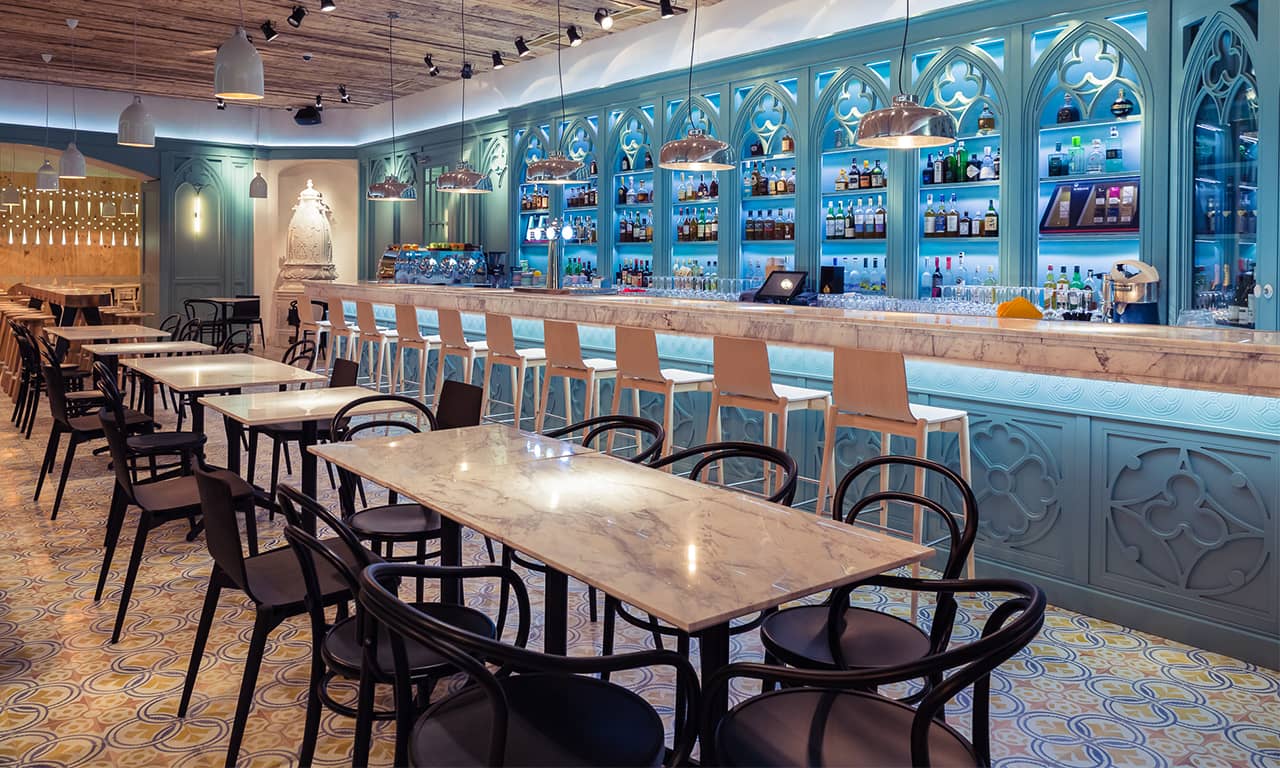
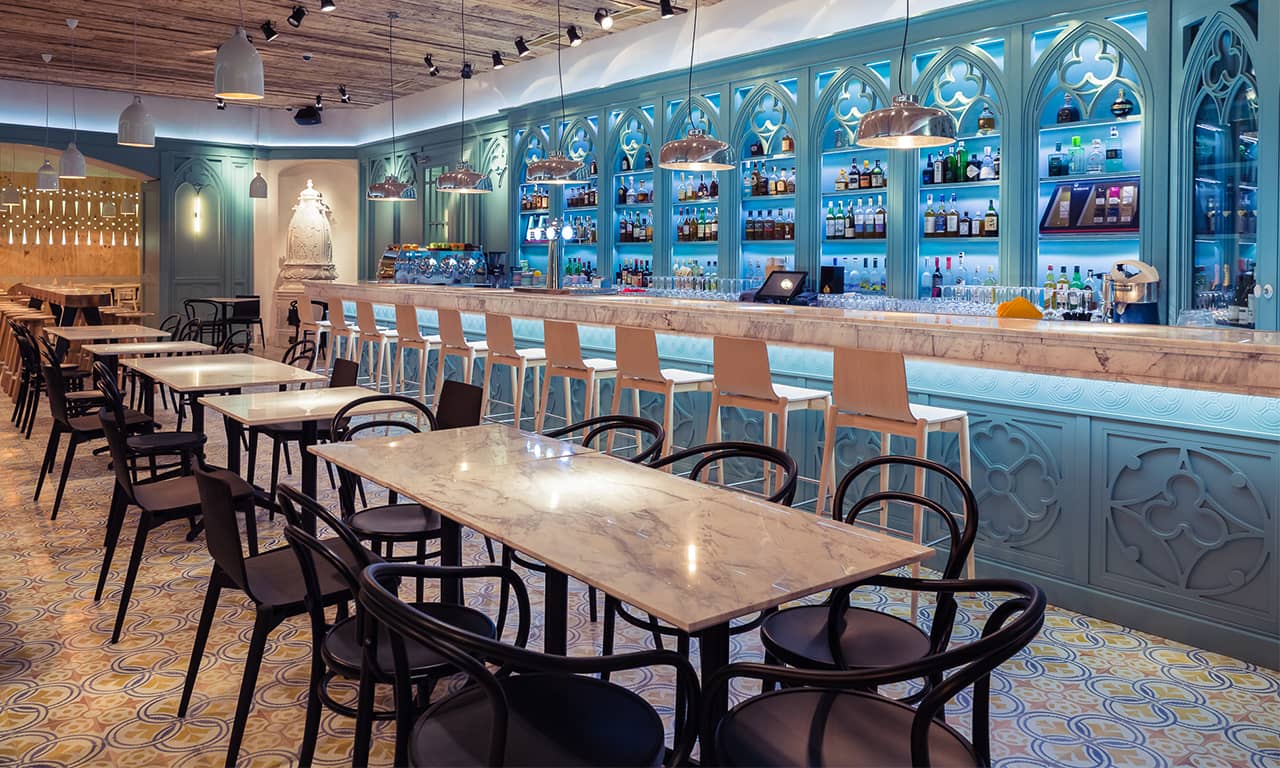
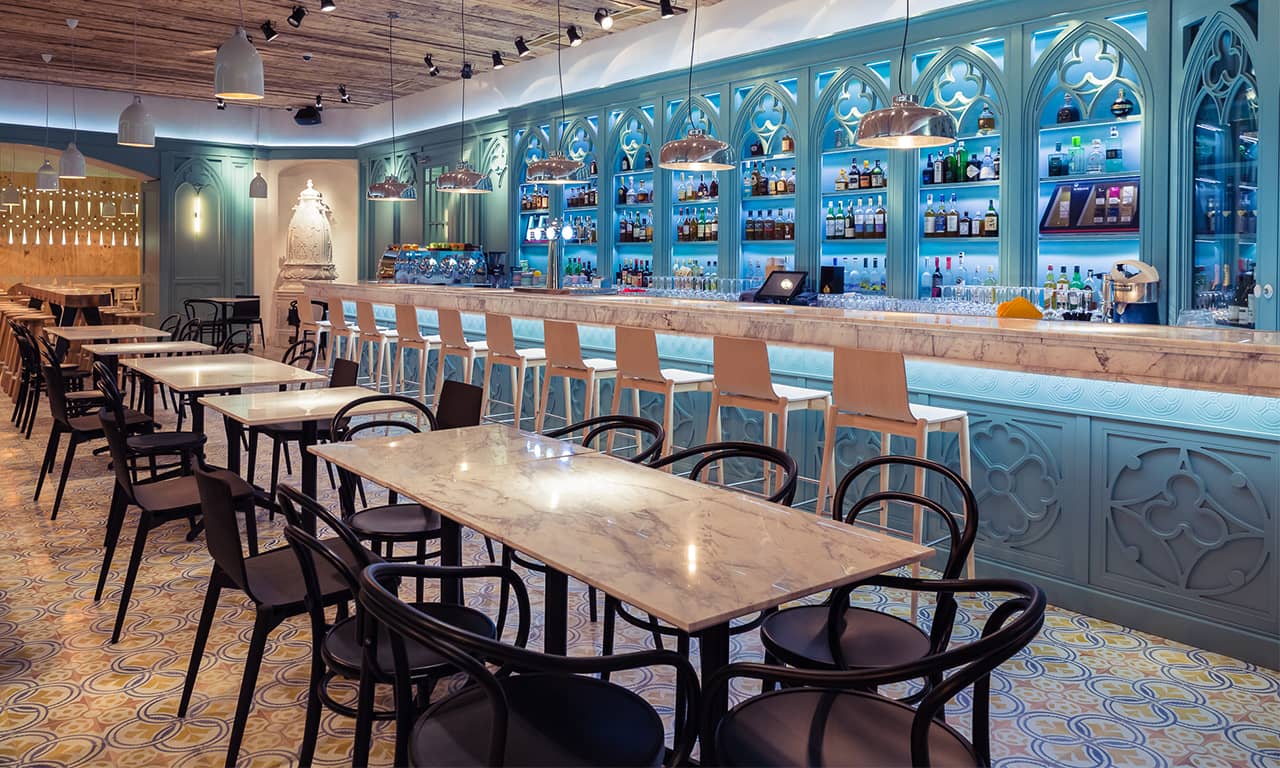
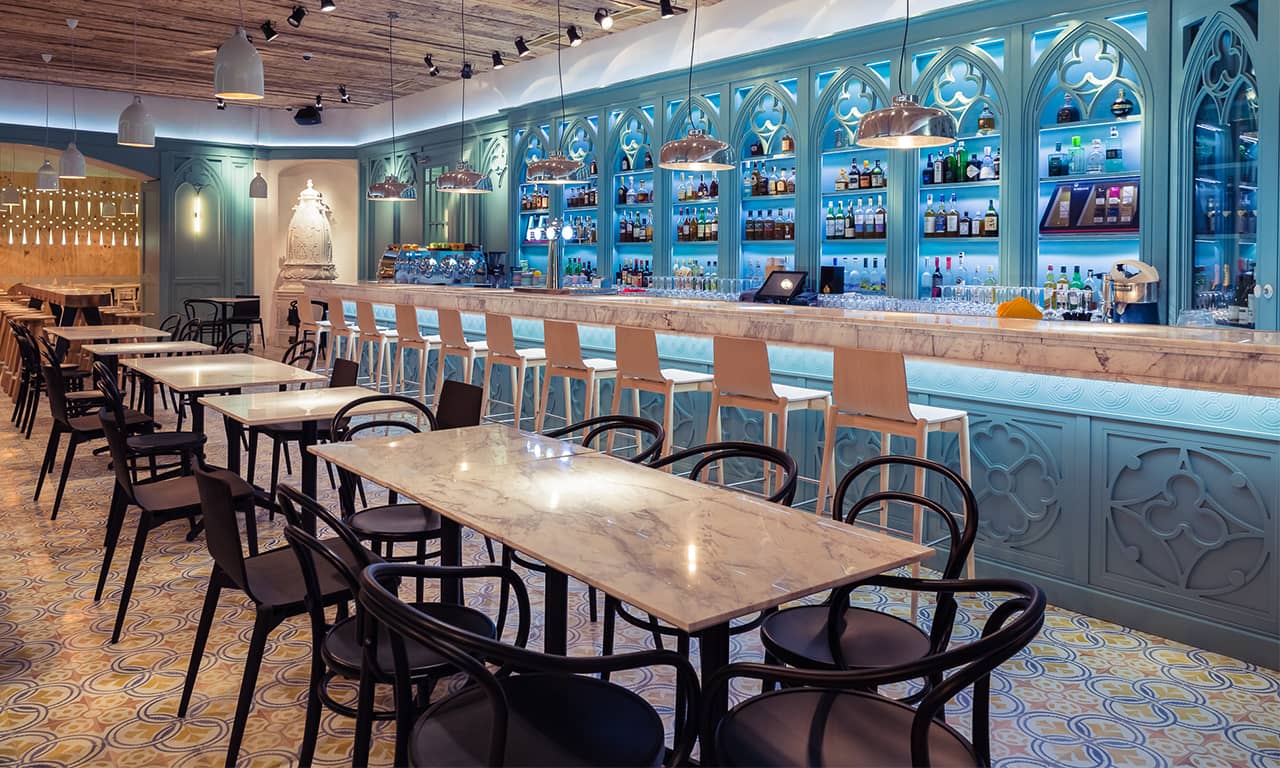
Bars are likewise completely personalised and are designed around the specific needs of each venue. Their proportions create a comfortable and accessible experience for guests, while ergonomic heights support efficiency behind the counter. Work zones and service areas are planned to reduce unnecessary movement, and the selection of chairs forms part of that planning. A range of seat heights ensures that each chair is suited to its bar or counter and that circulation remains smooth. Where visual continuity is desired, the bar can be coordinated with complete tables.
The type of venue should also guide these choices. Cafés frequently benefit from compact wall benches that make efficient use of limited floor space. Food courts are best served by linear, high-capacity benches. Hotel dining areas can adopt modular layouts that adapt to fluctuating guest numbers.

Finishes: legs, colours and other details
Fabric is the one that gets noticed first by the guests, but the base of a piece changes its style and overall perception, just as much. When it comes to the base of the chair, what is already well known is that chairs can have rounded or square legs. Rounded legs look softer and more relaxed. Square legs look cleaner and more modern. Benches can have a sockel base or elegant legs, depending on the style you want for your Horeca facility.
Customizing your frames might mean more than you first think. You can choose from a wide range of finishes and colours, from bold to neutral, to match your interior, and by using the same style across chairs, benches and bars makes the whole venue feel put together.
Bar surfaces. Countertops are chosen to look good, but also to be easy to clean and to last. A bar counter is used all day, so durable materials keep it looking good for longer.
Extra details. Decorative stitching and piping give a piece more character. Power sockets and LED strips on benches are useful for guests. Floor glides protect your floors, and stackable chairs make life easier for your team.
Ready to adapt the furniture elements to your project?
Explore furniture and materials suited to your space, climate and daily operations.
Fabrics: more than 500 to choose from
We offer over 500 fabric versions for chairs and benches, making it easier for you to find the right colour, texture and mood for your venue. The key is to choose a fabric that looks good and also suits the overall theme of your space.
- Restaurants: premium fabrics with decorative stitching, plus stain-resistant, easy-clean finishes for daily spills.
- Hotel dining areas: fire-retardant, easy-to-clean fabrics that handle heavy use.
- Hotel lounges: soft, comfortable fabrics with good pilling resistance, so they keep a smooth look.
- Cafés and pet-friendly venues: hard-wearing, scratch-resistant fabrics that are easy to wipe.
- Food courts and terraces: water-resistant, stain-resistant surfaces that are quick to clean.
Behind these properties are a few tests and certificates worth knowing.
Wear and pilling. Hospitality fabrics are compared by abrasion resistance, usually measured with the Martindale test. The higher the number of cycles, the longer a fabric should hold up. The pilling test is just as useful, because it shows how quickly small bobbles appear on the surface. Both figures tell you more than touch alone.
Fire safety. Public venues often have fire-safety rules for upholstered furniture, and these differ from country to country. Make sure your fabric is fire-retardant according to the rules that apply to your project.
Stain protection. Treatments such as Fibreguard help fabrics repel spills and stains, which is very useful in busy venues.

Putting it all together: some examples
The same piece can look very different depending on the choices around it.
- Restaurant: a fully upholstered bench with decorative stitching and square legs, for a refined look.
- Café: a compact wall bench with rounded legs in an easy-clean fabric, for a relaxed look.
- Hotel lounge: deep-seated lounge chairs and benches in soft fabrics.
- Bar: a custom counter planned around your team, with chairs at the right height.
- Terrace: side chairs, arm chairs and bar chairs that keep the same style outdoors.
How long does a project take? It depends less on how big the space is and more on how ready you are to decide. Every project is made to order, so there is no fixed delivery time. In order to save time, it helps to:
- Decide the concept and style first.
- Confirm your measurements and layout early.
- Choose fabrics and finishes together, and ask for samples early, because fabric is often where decisions slow down.
- Approve the details (stitching, accessories, seat heights) before production starts.
The more you decide in advance, the faster you go from first idea to finished space.
Every project starts the same way: with a space, an idea and a few questions. You don't need to have all the answers yet. Some clients arrive with exact measurements and a finished concept, others with only a mood and a floor plan. Both are good places to begin. If you are thinking about a new venue, or about giving an existing one a fresh look, tell us what you have in mind. We can talk through the layout, the legs, the fabrics and the details, and help you turn a rough idea into pieces that fit your space and your guests.
If you found this useful, you may also enjoy our article on Modular Versus Fixed Furniture: Choosing the Right Approach for Your Space.
OUR SERVICES
MORE FROM OUR BLOG
About P&M Furniture
P&M Furniture designs and delivers commercial-grade furniture for hotels, restaurants, cafes and bars across Europe, combining durability with design that supports how each venue actually works.
Ready to adapt the furniture elements to your project?
Explore furniture and materials suited to your space, climate and daily operations.
Request a Quote