
This guide explores boutique hotel furniture trends: personalization at scale, with practical insights for hospitality procurement professionals navigating the specific requirements of this specialised area.

1. What Defines Boutique Hotel Furniture Today
Boutique hotel furniture in the current market is defined less by a single aesthetic and more by the commitment to expressing a property's specific identity through furniture choices that could not be found in a chain hotel property. The shift away from standardized contract furniture toward pieces with a more individual character has accelerated significantly in the last five years, driven by guest expectations shaped by social media and the premium that independent travelers increasingly place on distinctive experience over generic comfort.
This trend creates both opportunity and challenge for boutique hotel operators. The opportunity lies in differentiation: furniture that tells a story and reinforces a property's unique positioning creates a more memorable guest experience and a stronger visual identity across social channels. The challenge is that achieving genuine distinctiveness at scale, across multiple rooms or properties, requires more sophisticated procurement and specification than simply selecting standard contract furniture from a catalog.
2. Balancing Individuality with Operational Practicality
The most common failure mode in boutique hotel furniture specification is choosing pieces for their visual impact without adequately evaluating their operational performance. A beautifully designed chair that is difficult to clean, a distinctive table with a surface that marks easily, or a striking lamp that cannot be serviced locally, all create operational problems that erode the guest experience that the design was intended to create. The best boutique hotel furniture achieves its visual effect within the practical constraints of hotel operation rather than at their expense.
Specifying boutique furniture with a clear set of operational requirements, including cleaning protocols, durability standards, and local serviceability, alongside the aesthetic brief, produces specifications that deliver on both dimensions. Working with a furniture partner who understands both the design ambition and the operational reality of hotel management is essential to achieving this balance reliably across a full property specification.

3. Personalization Options Within a Production Framework
True bespoke furniture, entirely custom-designed and manufactured for a single property, is available but represents the highest cost and longest lead time option for boutique hotel specification. Most boutique properties achieve the level of personalization they need through a more cost-effective approach: selecting base pieces from a supplier's existing commercial range and customizing the finish, fabric, and detailing to create a distinctive result that is unique to the property without the full cost and timeline of completely bespoke production.
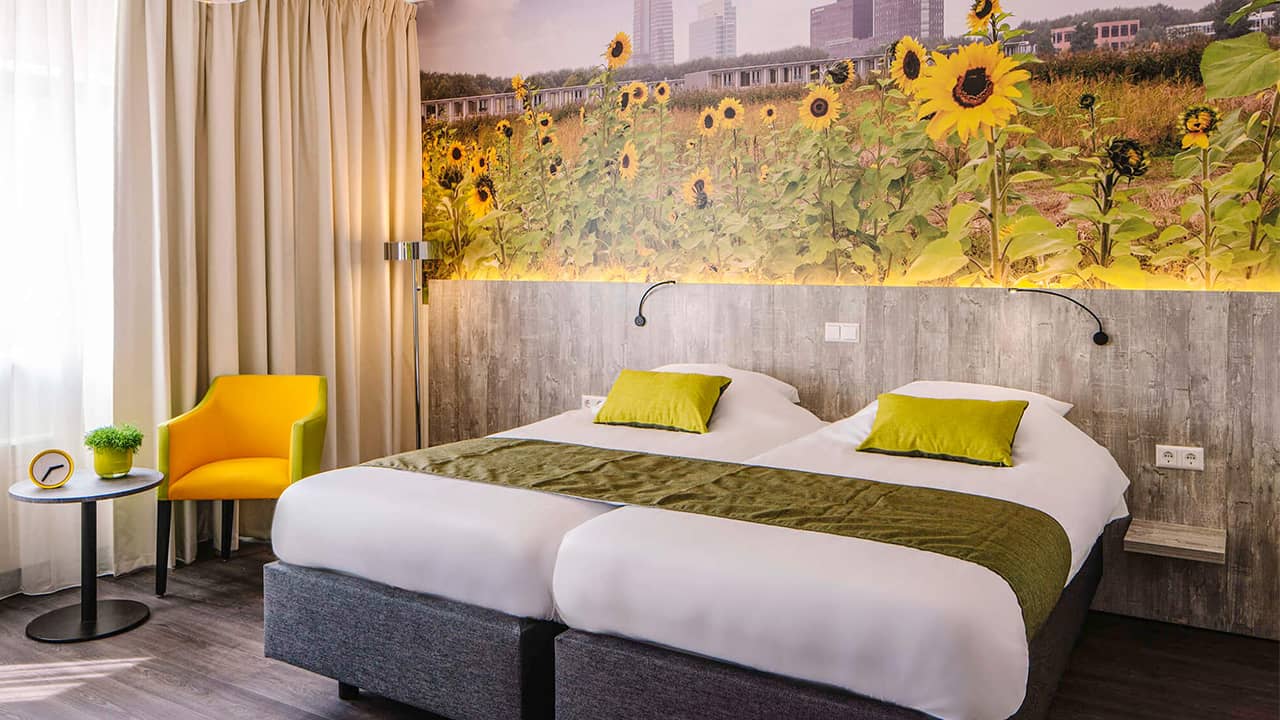
This semi-custom approach works particularly well for upholstered pieces, where a standard commercial frame paired with a specific fabric selection, a distinctive piped edge, or a non-standard button configuration can look entirely custom-designed without the custom production premium. For solid wood or metal pieces, frame finish customization within the supplier's existing range, whether that is a specific paint color, a non-standard lacquer, or a distinctive metal treatment, achieves similar differentiation at a fraction of the cost of a completely bespoke piece.
4. Furniture as Brand Expression Across Multiple Rooms
Maintaining design coherence across a boutique hotel property, where individual rooms may have distinct themes, requires a furniture specification approach that creates a family of pieces related by material, proportion, or detail rather than identical products. This allows each room to have its own character while maintaining an overall aesthetic language that connects the property and prevents the interior from feeling like a collection of unrelated spaces.
The furniture specification document for a boutique hotel should map the relationship between room types explicitly, identifying which pieces carry across all room categories and which are specific to individual room types or themes. This mapping exercise also reveals the total number of distinct product specifications the property requires, which directly affects production cost and complexity.
5. Sourcing Strategies for Small Boutique Operators
Boutique hotel operators working at smaller scale, typically properties with fewer than fifty rooms, face procurement challenges that larger hotel groups do not. Order volumes that fall below commercial minimum order quantities for some suppliers, budget constraints that make fully bespoke specification impractical, and the management bandwidth required to coordinate multiple specialist suppliers all work against the smaller operator achieving the level of furniture differentiation they want at a practical cost.
Working with a single supplier who can cover the full furniture specification for a property, rather than sourcing each category from a different specialist, simplifies procurement significantly and often unlocks better pricing through consolidated order volume. At P&M Furniture, we work with boutique hotel properties of all sizes to develop furniture specifications that achieve genuine differentiation within practical procurement parameters. Contact our team to discuss your property.
6. Future Trends in Boutique Hotel Furniture
Several directions are shaping boutique hotel furniture specification in the near term. Sustainability credentials are increasingly relevant to the boutique guest profile, and furniture made from certified sustainable materials, or with documented supply chain transparency, is becoming a genuine differentiator in the boutique market. Furniture that integrates discreet charging and connectivity solutions without compromising visual design is being specified more widely as the expectation of seamless device connectivity in hotel rooms becomes universal.
Local material sourcing and craft references, which tie a property's furniture story to its geographic context, are also increasing in boutique specification as properties seek to create a sense of place that is genuinely rooted in their location rather than applicable to any hotel anywhere in Europe.

Your Checklist
- Defined the balance between distinctive design and operational practicality for the property's furniture specification
- Evaluated semi-custom options (stock frames with custom fabric/finish) as a cost-effective alternative to fully bespoke
- Mapped which furniture pieces carry across all room categories and which are specific to individual room types
- Confirmed that all specified pieces meet commercial durability standards alongside aesthetic requirements
- Assessed sustainability credentials of materials for the boutique guest profile the property targets
- Discussed multi-property or future-location plans with the supplier to support pricing and continuity commitments
Contact P&M Furniture to discuss your boutique hotel furniture furniture requirements.
Related Services
More From Our Blog
About P&M Furniture
P&M Furniture is a HoReCa furniture and interior design specialist, helping hotels, restaurants, and cafés across Europe create spaces that are both beautiful and built to last. From custom-made furniture to complete interior concepts, our team supports every step of your project, from the first idea to final installation.
Planning boutique hotel furniture furniture?
Talk to our team about your project requirements.
Request a Quote →