Few procurement decisions generate as much internal debate as the choice between custom and off-the-shelf hotel furniture. Design teams often push for custom solutions that fully express brand identity, while finance and operations teams weigh the cost, risk, and timeline implications of anything outside a standard catalog. Neither side is wrong, the right answer depends entirely on your property's specific priorities, budget, and schedule.

This article breaks down what each approach actually involves, where each makes the most sense, and how to decide with confidence rather than defaulting to whichever option feels safer.
1. What "Custom" Actually Means in Hotel Furniture Procurement
"Custom" covers a wide spectrum, and clarifying where your project sits on that spectrum early avoids confusion later. At the lighter end, custom might mean selecting a non-standard fabric or finish on an existing frame. At the heavier end, it means designing a piece from a blank page, new dimensions, new joinery, new materials, often developed in close collaboration between your design team and the manufacturer's engineers.
Understanding which type of customization you actually need is the first step toward an accurate budget and timeline. Many procurement teams overestimate how "custom" their requirements really are, when a finish or fabric change on a proven frame would achieve the same brand outcome at a fraction of the cost and lead time.

2. The Case for Off-the-Shelf: Speed, Cost, and Predictability
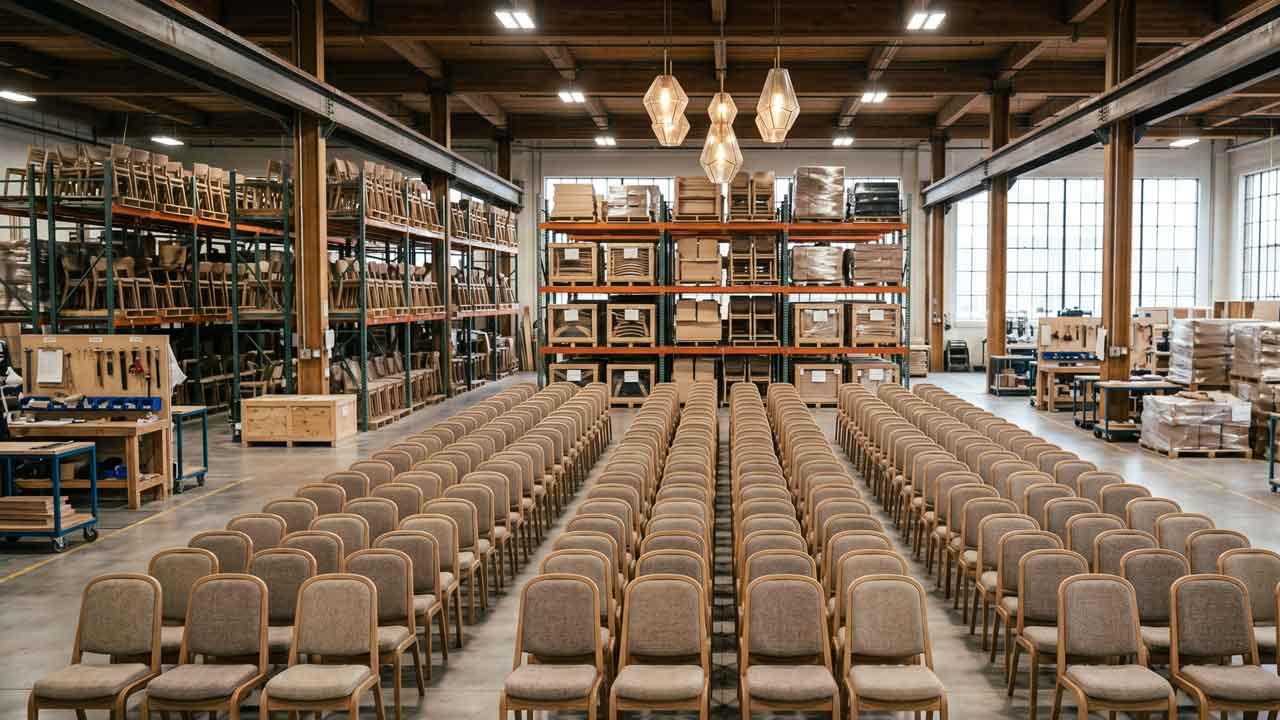
Off-the-shelf hotel furniture, meaning established product lines with proven manufacturing processes, offers three clear advantages: shorter lead times, lower unit costs (since tooling and design costs are amortized across many buyers), and predictable quality, since the product has already been refined through production.
For properties with tight renovation timelines, limited budgets, or large unit counts where consistency matters more than uniqueness (back-of-house furniture, for example), off-the-shelf solutions are often the more sensible choice. Many quality manufacturers also offer enough finish and fabric variety within their standard ranges to achieve meaningful brand differentiation without full customization.
3. The Case for Custom: Brand Differentiation and Spatial Fit

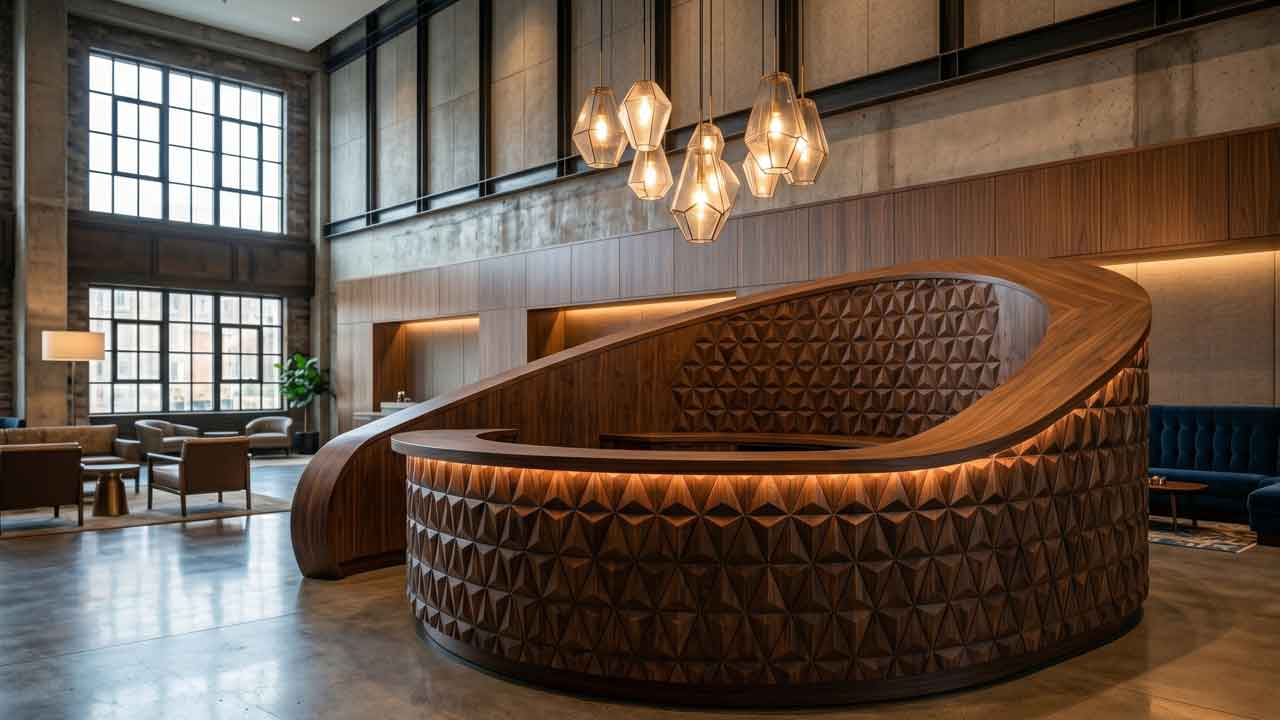
Custom furniture earns its premium when standard products genuinely cannot deliver what a project needs, whether that's a non-standard dimension to fit an unusual lobby footprint, a signature piece central to brand storytelling, or a level of material distinctiveness that off-the-shelf simply can't match.
Flagship properties, boutique hotels building a strong independent identity, and any space intended as a visual centerpiece (a reception desk, a statement lobby sofa, a custom banquette shaped to an irregular room) are the strongest candidates for genuine custom investment. The goal should always be strategic customization, reserving custom budget for the pieces that truly carry brand weight, rather than customizing everything by default.
Not sure which approach fits your project?
P&M Furniture offers both proven standard collections and full custom development, often combined within the same project for the best balance of cost and impact.
Browse Our Furniture →4. Hybrid Approaches: Customizing Within a Standard Platform
The most cost-efficient projects often land between the two extremes: starting from a proven, standard frame or structural platform, then customizing finishes, fabrics, dimensions within a defined range, or small structural details. This approach captures much of the brand differentiation benefit of custom furniture while retaining most of the cost and lead-time predictability of standard products.
Ask potential suppliers directly what hybrid options they offer. A manufacturer with an in-house interior design and engineering team will typically be far more capable of this kind of flexible, partial customization than one purely focused on either fully standard catalog sales or fully bespoke commissions.

5. Lead Time and Budget Implications of Each Approach
As a general pattern, off-the-shelf furniture typically ships faster, since it draws on existing tooling, fabric stock, and a refined production process. Custom furniture requires design development, prototyping, and often tooling investment, which adds weeks or months depending on complexity. Hybrid approaches usually sit in between, depending on how far the customization deviates from the base platform.
Budget follows a similar pattern: standard products benefit from economies of scale across many buyers, while custom development costs are concentrated on your single order. This doesn't mean custom is always more expensive overall, for very large orders, custom tooling investment can sometimes be justified by long-term unit cost savings, but it does mean custom typically requires a larger upfront commitment and longer planning horizon.
6. Quality Consistency: Custom vs Off-the-Shelf Risk Profiles
Off-the-shelf products carry lower quality risk because the manufacturing process has already been validated through prior production runs. Custom products carry more inherent risk, simply because each new design must prove itself through prototyping and early production before consistency at scale is confirmed.
This doesn't mean custom furniture is unreliable, established hospitality manufacturers manage this risk through structured prototyping and approval stages, but it does mean your project schedule should allow time for sample approval, and ideally a pre-production sample review, before committing to full production of any custom piece.
7. How to Decide: A Framework for Your Property
Rather than deciding custom-vs-standard for an entire project at once, evaluate piece by piece, asking: Does this item directly carry brand identity or guest-facing visual impact? Is the quantity large enough that custom tooling investment could pay off? Does our timeline genuinely allow for custom development lead times? Is there a standard or hybrid option that would achieve 80% of the desired effect at a fraction of the cost and risk?

Your Custom vs Off-the-Shelf Decision Checklist
- Identified which pieces genuinely need custom treatment vs which can use standard products
- Explored hybrid (customized-standard) options with potential suppliers
- Confirmed lead times for any custom items align with your renovation schedule
- Budgeted for prototyping and sample approval stages on custom pieces
- Compared total cost of ownership, not just unit price, across both approaches
At P&M Furniture, we work with hotel groups to find the right balance for each project, combining proven standard collections with targeted custom development where it genuinely strengthens brand identity. Contact our team to discuss which approach fits your property best.
Related Services
More From Our Blog
About P&M Furniture
P&M Furniture is a HoReCa furniture and interior design specialist, helping hotels, restaurants, and cafés across Europe create spaces that are both beautiful and built to last. From custom-made furniture to complete interior concepts, our team supports every step of your project, from the first idea to final installation.
Weighing custom vs standard for your next project?
Talk to our team about the right balance of customization, cost, and lead time for your property.
Request a Quote →