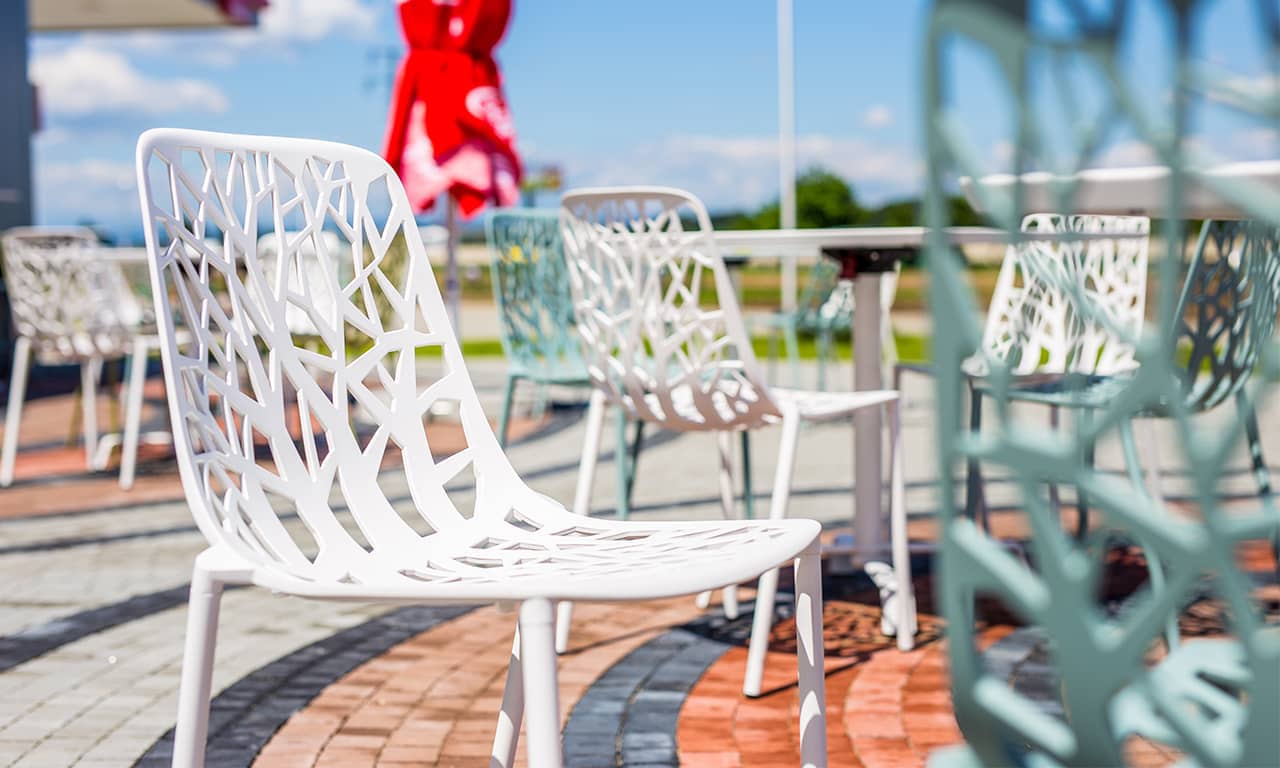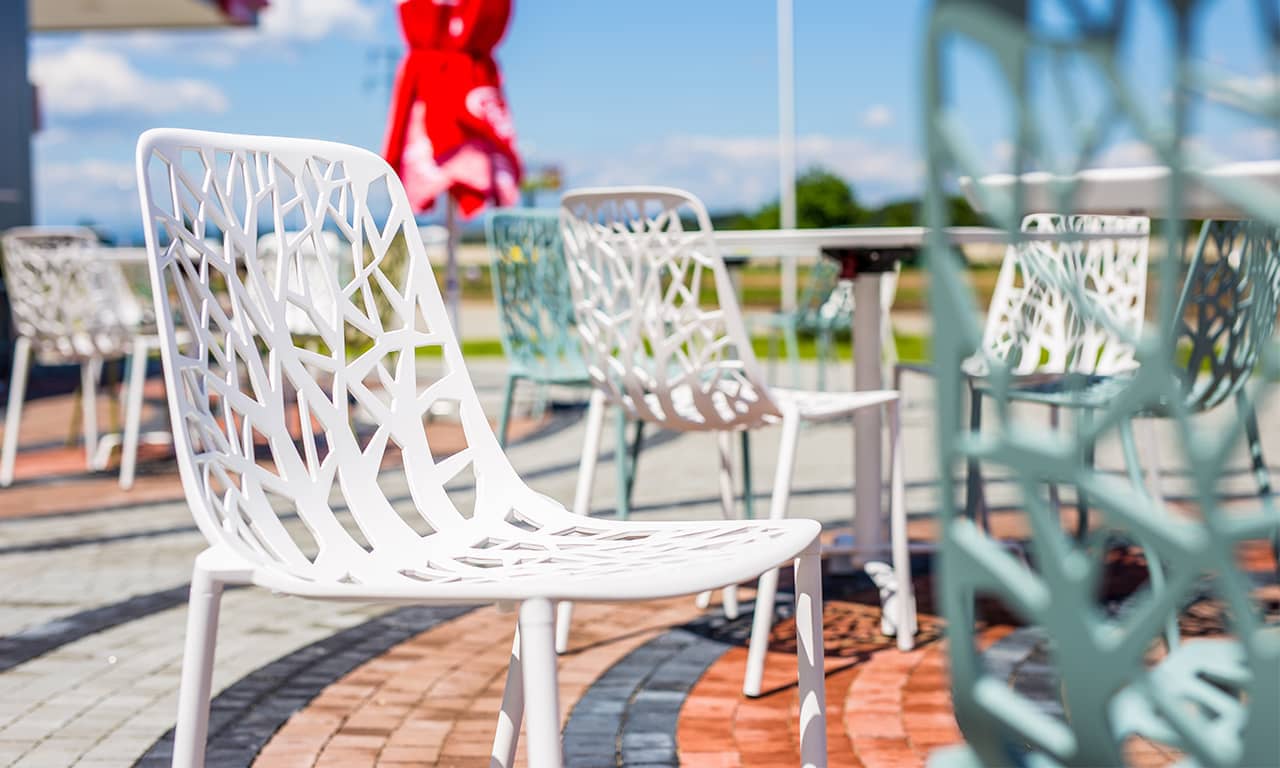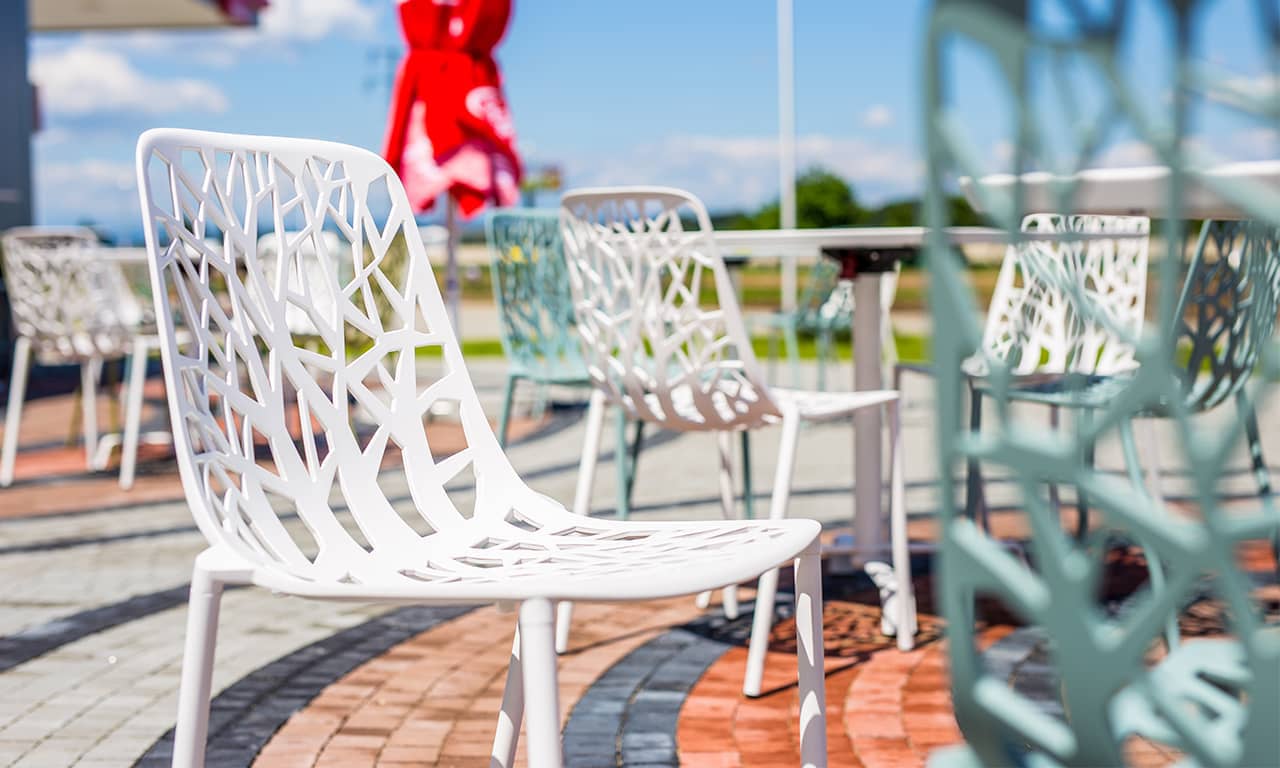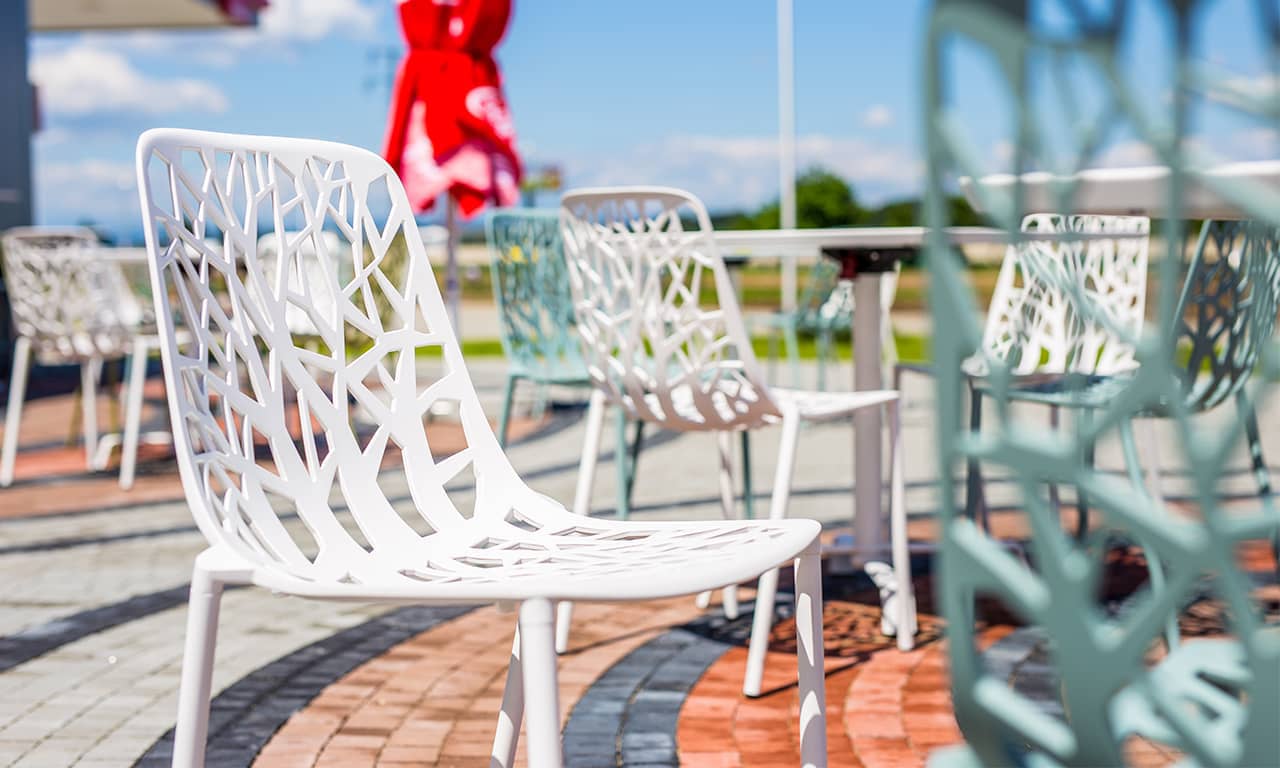
In a quick-service restaurant, furniture is subject to some of the most demanding conditions in hospitality. Chairs are dragged, stacked, wiped down, bumped and used hundreds of times a day, often by guests who stay for twenty minutes or less. Choosing the wrong material can lead to longer cleaning times, higher replacement costs and a dining area that shows signs of wear long before it should.
Reinforced polypropylene offers a practical response to these demands. Combining durability and low weight with cost efficiency, it meets the everyday requirements of busy restaurant environments while allowing for considerable design flexibility.

What is reinforced polypropylene?
Polypropylene (PP) is a lightweight, durable thermoplastic widely used in commercial seating for its versatility and resilience. When reinforced with glass fiber, its mechanical performance is significantly enhanced, resulting in a material with greater rigidity, strength, and dimensional stability.
This enhanced structure allows chairs to maintain their shape under sustained loads, withstand repeated impacts, and perform reliably in demanding, high-traffic environments. It offers an effective balance of structural performance, lightweight construction, and cost efficiency, without the added weight and expense of metal or solid wood. Its suitability for precision molding also enables the creation of seamless, continuous chair shells with fewer joints and connection points. By reducing the number of components that can loosen or wear over time, reinforced polypropylene supports a cleaner design, consistent performance, and long-term reliability.
Why it works for fast-casual and QSR
Easy to clean: the surface is smooth and non-porous, so it does not absorb liquids. Spills, sauces and grease easily wipe away in seconds with standard detergents, and many models tolerate regular disinfecting. There are no fabric seams or deep crevices where crumbs and stains collect, which shortens daily cleaning routines and makes deep cleaning far simpler for the closing team.
Lightweight and easy to rearrange: most polypropylene chairs can be moved with one hand. Staff can push tables together for groups, lift 2-3 stacked chairs at once, open up space for peak hours or clear the floor entirely for cleaning, without heavy lifting and with less risk of scratching floors.
Stackable: most models nest in compact columns, which simplifies storage, seasonal changes and terrace setups. Resetting the dining room at closing becomes a matter of minutes. Always check the maximum safe stacking height stated for each model.
Durable and low maintenance: There is no paint to chip, no upholstery to tear and no wood to split. Color runs through the whole material, so minor scratches are far less visible than on coated surfaces. Wear parts such as glides can usually be replaced without replacing the chair.
Cost-effective: a lower purchase price and a long service life keep replacement costs predictable, which matters when furnishing multiple locations. Light weight and stackability also reduce shipping and storage costs, a real advantage for franchise rollouts.
Wide variety of colors and shapes: polypropylene can be molded into almost any form and produced in a broad palette. Matching a brand color across an entire chain is straightforward, so practicality does not come at the expense of your brand's identity.
Indoor and outdoor use: with UV stabilization, the same chair can move between the dining room and the terrace without fading or becoming brittle. It does not rust, rot or swell with humidity.
Recyclable: polypropylene is a recyclable material, and some manufacturers now offer models made with recycled content, a growing consideration for brands with sustainability goals.
Ready to choose the polypropylene furniture for your project?
Explore furniture and materials suited to your location, style and interior design.
What to check before ordering
The best polypropylene chair for a project is the one matched to its environment and usage. A few details help you make that match:
- Glass fiber content and compound quality. These determine stiffness and long-term performance.
- UV stabilization, essential for terraces and spaces with large windows.
- Structural design. Ribbing, wall thickness and leg geometry matter as much as the material itself, especially where the legs meet the seat.
- Compliance with commercial standards, such as local fire and safety requirements for your market.
- Weight capacity and stacking limits stated by the manufacturer.
- Feet and glides, which should protect the floor and be replaceable.
- Seat comfort. A contoured seat keeps guests comfortable for a short meal without encouraging long stays at peak hours.
Polypropylene is an excellent choice for high-turnover dining areas, outdoor seating, food courts, self-service zones, school and corporate canteens, and any multi-site rollout where consistency and easy replacement matter.
In more design-led fast-casual concepts, it pairs well with timber or metal tables and upholstered banquettes. The plastic seating adds practicality while the other materials bring warmth, so the space does not feel purely functional.

Common mistakes to avoid
Choosing on price alone. Very cheap chairs often use thin walls or low-quality compounds, and they crack or deform under heavy daily use. A slightly higher upfront cost usually pays for itself.
Ignoring the environment. A chair rated for indoor use will fade and weaken on a sunny terrace. Match the specification to where the chair will actually live.
Skipping the sample. Photos hide a lot. Test a sample for comfort, stability and cleaning behavior before placing a large order.
Forgetting spare parts. Replaceable glides and available spares extend the life of the whole set, especially across several locations.
In fast-casual and QSR, furniture is part of the operation. It has to keep up with high turnover, short cleaning windows and constant rearranging, and it still needs to look good in front of guests. Reinforced polypropylene meets those needs in a way that few other materials do.
It wipes clean in seconds, moves with one hand and stacks away in minutes, so staff spend less time on the dining room and more on the guest experience. Its durability and low maintenance keep replacement costs predictable. Its range of shapes and colors lets a brand express its identity, from a single café to a chain of fifty locations. With UV-stabilized models, the same furniture can serve both the dining room and the terrace, which simplifies planning and purchasing.
The best results come from matching the specification to the way the space will be used. Looking at construction details, certification, intended environment and available spare parts helps ensure the furniture performs well from the first day to the last. Testing a sample before a large order is a simple step that gives you real confidence in comfort, stability and finish.
Whether you are opening your first location or rolling out a new concept across several sites, the right polypropylene seating can make daily operations easier and the space more inviting. It is a practical investment that keeps working long after opening day.

If you found this useful, you may also enjoy our article on Food Hall and Ghost Kitchen Furniture: Practical Considerations.
OUR SERVICES
MORE FROM OUR BLOG
About P&M Furniture
P&M Furniture designs and delivers commercial-grade furniture for hotels, restaurants, cafes and bars across Europe, combining durability with design that supports how each venue actually works.
Ready to choose the polypropylene furniture for your project?
Explore furniture and materials suited to your location, style and interior design.
Request a Quote