The lobby is the single highest-traffic, highest-visibility space in any hotel. It absorbs more daily wear than almost any guest room, while simultaneously needing to communicate brand identity within seconds of a guest walking through the door. For a procurement manager, this dual demand, durability and design impact, makes lobby furniture one of the more technically demanding sourcing categories in any renovation or new-build project.

Unlike guestroom furniture, which is replicated dozens or hundreds of times but used by one party at a time, lobby furniture is used continuously by a constantly rotating stream of guests, visitors, and staff. This article breaks down the specifications that matter most when sourcing furniture for this critical space.
1. Traffic Flow and Durability Requirements
Lobby furniture experiences a fundamentally different usage pattern than guestroom furniture. Where a guestroom chair might be used a handful of times per stay, a lobby armchair could be sat in, leaned on, or bumped past dozens of times per day. Specifications should reflect this: look for frame constructions rated for commercial/contract use, not residential-grade furniture relabeled for hospitality.
Upholstery fabrics for lobby seating should carry a high Martindale rating, generally 30,000+ rubs for moderate-traffic lobbies, and higher for flagship or high-volume properties. Frame joinery should be specified for commercial use, with reinforced corners and load-bearing points that won't loosen under repeated, varied-weight use throughout the day.

2. Seating Capacity Planning and Layout Flexibility
Lobby seating needs vary dramatically by hotel type and even by time of day. A business hotel lobby might need to accommodate guests waiting for transport in the morning and small informal meetings in the afternoon. A leisure resort lobby might need flexible seating for families with luggage during check-in peaks.
When specifying furniture, work with quantities that allow for at least two distinct configurations: a "default" daily layout and a higher-capacity layout for peak periods or events. Modular and easily reconfigurable pieces, sectional sofas, nesting tables, and lightweight accent chairs, give your operations team flexibility without requiring additional furniture purchases for occasional peak demand.
Specifying furniture for a high-traffic lobby?
P&M Furniture builds lobby seating and tables to commercial-contract specifications, with material and durability documentation provided on request.
Browse Our Furniture →3. Material Specifications for High-Traffic Public Areas
Lobby furniture is exposed to spills, luggage scrapes, sunlight through large windows, and constant cleaning cycles. Material selection should account for all of these stressors. Solid wood or quality veneer surfaces should be specified with UV-resistant finishes if positioned near windows. Metal frames should be powder-coated rather than painted, for better resistance to scuffing and chemical cleaning agents.
For upholstery, request material samples and ask explicitly about stain resistance, cleanability with commercial-grade disinfectants (a heightened priority since 2020), and colorfastness under UV exposure. A supplier with strong interior design and materials expertise should be able to recommend fabric and finish combinations that balance these technical requirements with your brand's aesthetic direction.
4. Acoustic and Lighting Considerations
Lobby furniture doesn't just need to look and perform well, it also plays a functional role in acoustic management. Hard-surfaced lobbies with high ceilings often suffer from excessive noise reverberation, and furniture (along with rugs and wall treatments) is one of the more cost-effective ways to soften this. Upholstered pieces, high-backed banquettes, and strategically placed sectional seating can all help break up sound and create a calmer auditory environment.
Furniture placement should also be planned in coordination with the lighting design, since poorly positioned seating can end up in shadow or under harsh direct light. This is one of several reasons procurement and design decisions should not happen in isolation from one another.

5. Reception Desk and Check-In Furniture Specifications
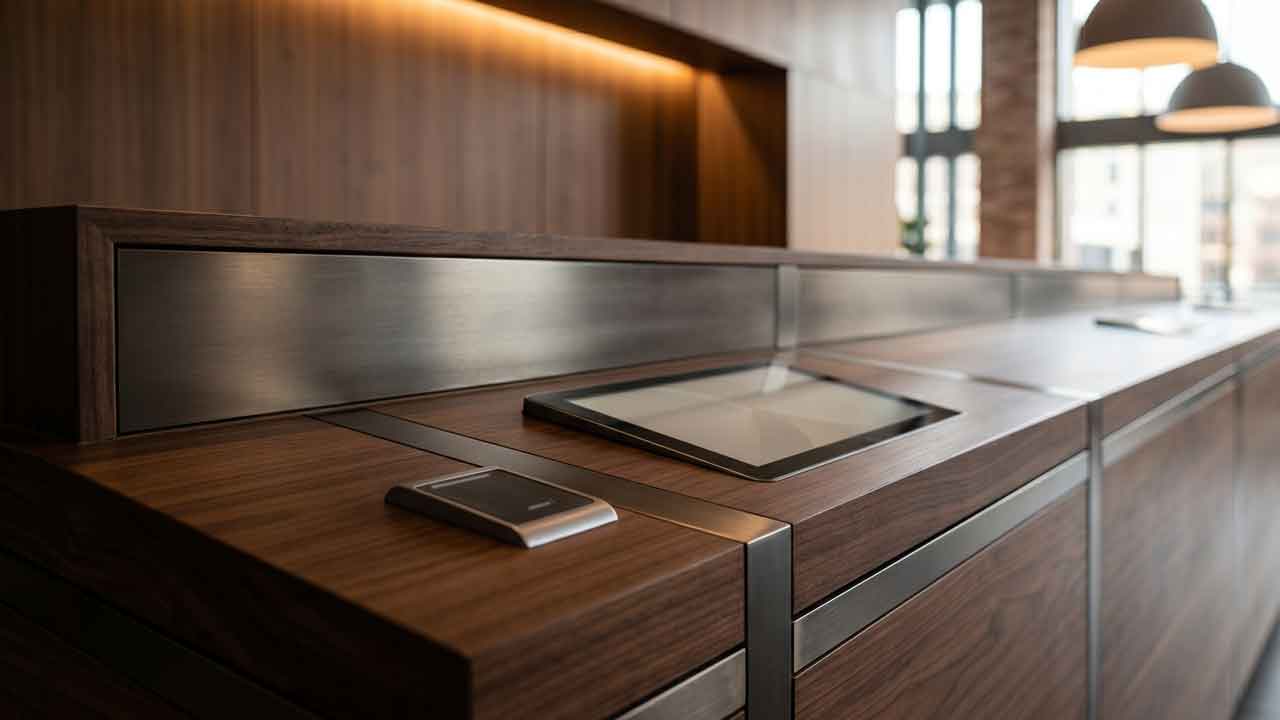
The reception desk deserves its own specification category, separate from general lobby seating. It needs to accommodate technology integration (POS systems, monitors, card readers), accessibility requirements (a portion of the desk at wheelchair-accessible height, per most European accessibility regulations), and staff ergonomics for employees who may stand or sit for extended shifts.
Specify desk materials that can withstand daily contact with luggage, card machines being set down and picked up repeatedly, and frequent cleaning. Custom millwork is common here, since reception desks are highly visible and need to align precisely with brand identity, but custom work also requires longer lead times, which should be factored into your project schedule early.

6. Fire Safety and Building Code Compliance
Public hospitality areas are typically subject to stricter fire safety regulations than guest rooms, given higher occupancy and the need for fast evacuation. Upholstery foams and fabrics for lobby furniture should meet the fire-retardant standards applicable in your specific market, these vary across EU countries, so confirm requirements with your local authority or fire safety consultant rather than assuming a single EU-wide standard applies uniformly.
Ask suppliers for compliance documentation upfront, not after the order has shipped. A supplier with established hospitality experience across multiple European markets will typically already understand these variances and can guide you accordingly.
7. Budgeting for Lobby Furniture: What Drives Cost
Lobby furniture budgets are driven by several factors beyond simple piece count: the ratio of custom to off-the-shelf items, material grade (commercial-contract fabrics and finishes cost more than residential-grade equivalents, for good reason), and the complexity of any millwork (reception desks, built-in seating, custom joinery).
When budgeting, build in a contingency for the reception desk and any signature statement pieces — these are typically the most customized, highest-cost items in a lobby furniture package, and the ones most likely to see specification changes during the design process.

Your Lobby Furniture Specification Checklist
- Upholstery rated for commercial/contract use with documented Martindale scores
- Frame construction specified for commercial, not residential, durability
- At least two seating layout configurations planned (default + peak demand)
- Materials confirmed for stain resistance, cleanability, and UV stability
- Reception desk specified separately, with accessibility and tech integration confirmed
- Fire-retardant compliance documentation obtained for your specific market
- Budget contingency allocated for custom/statement pieces
Lobby furniture sits at the intersection of brand expression and operational durability, getting the specifications right from the start avoids costly mid-project changes and ensures the space performs as well as it looks, years after opening day.
At P&M Furniture, we work with hotel groups across Europe to specify and manufacture lobby furniture that meets commercial durability standards without compromising on design. Contact our team to discuss your project's specific requirements.
Related Services
More From Our Blog
About P&M Furniture
P&M Furniture is a HoReCa furniture and interior design specialist, helping hotels, restaurants, and cafés across Europe create spaces that are both beautiful and built to last. From custom-made furniture to complete interior concepts, our team supports every step of your project, from the first idea to final installation.
Specifying furniture for your hotel lobby?
Get commercial-grade furniture specifications and a transparent quote from a manufacturer with European hospitality experience.
Request a Quote →