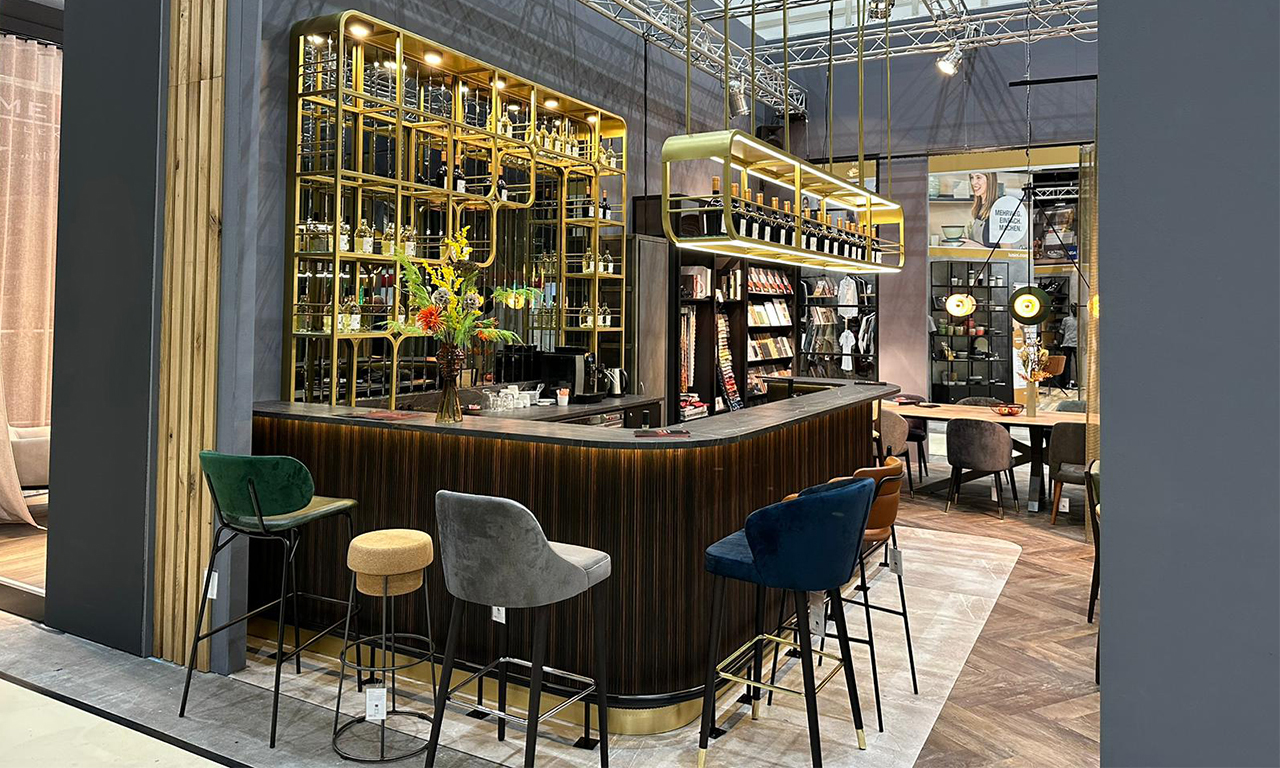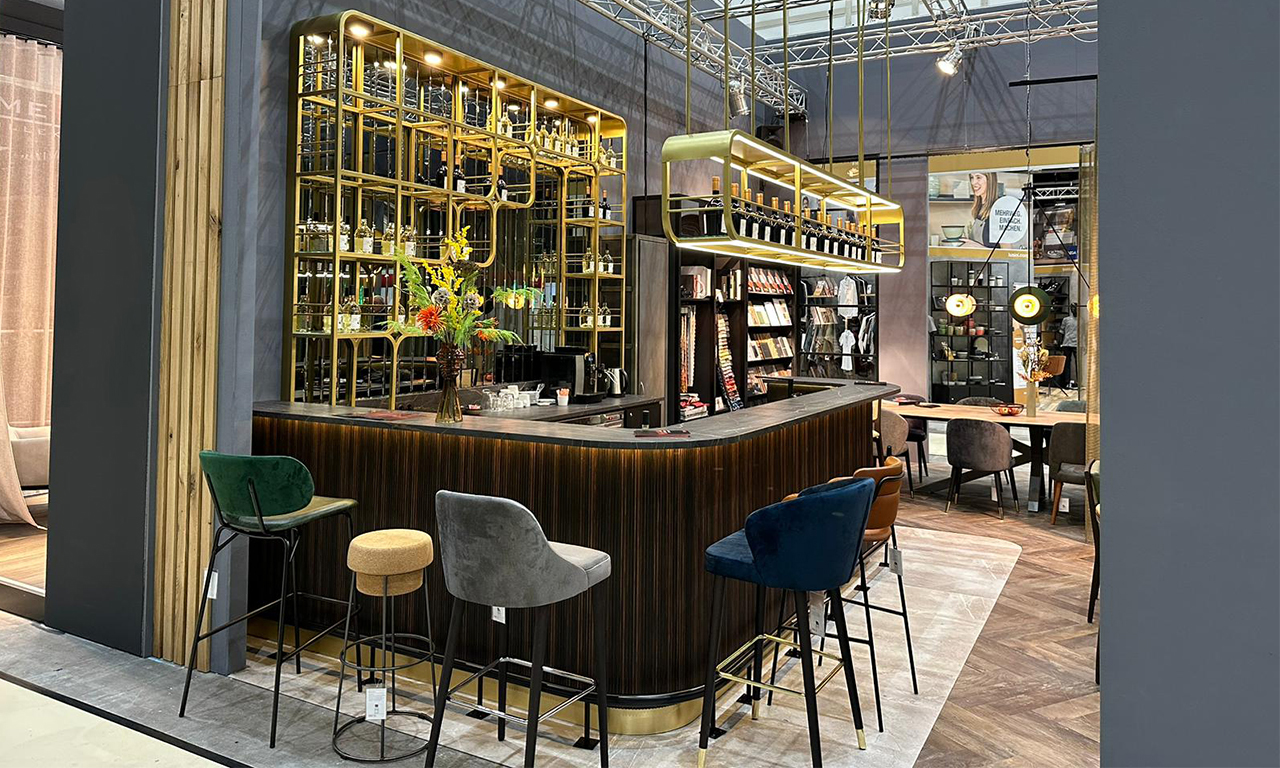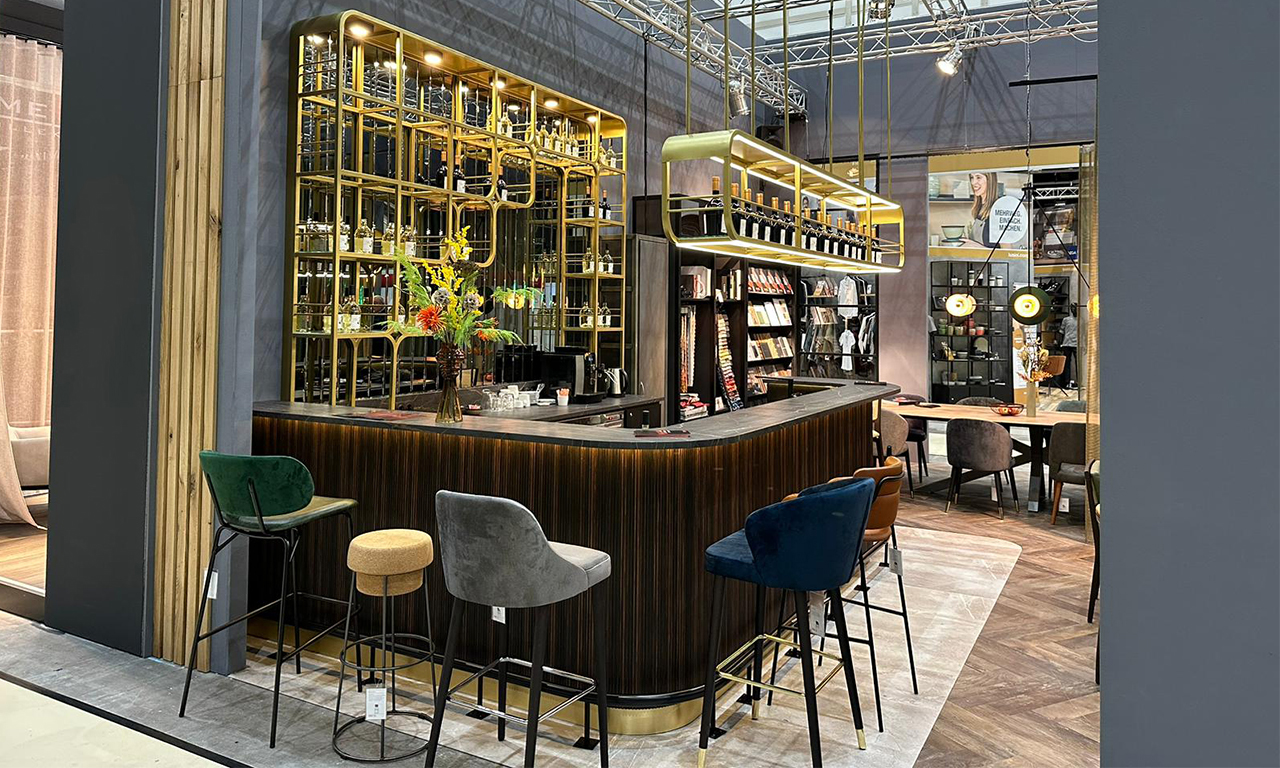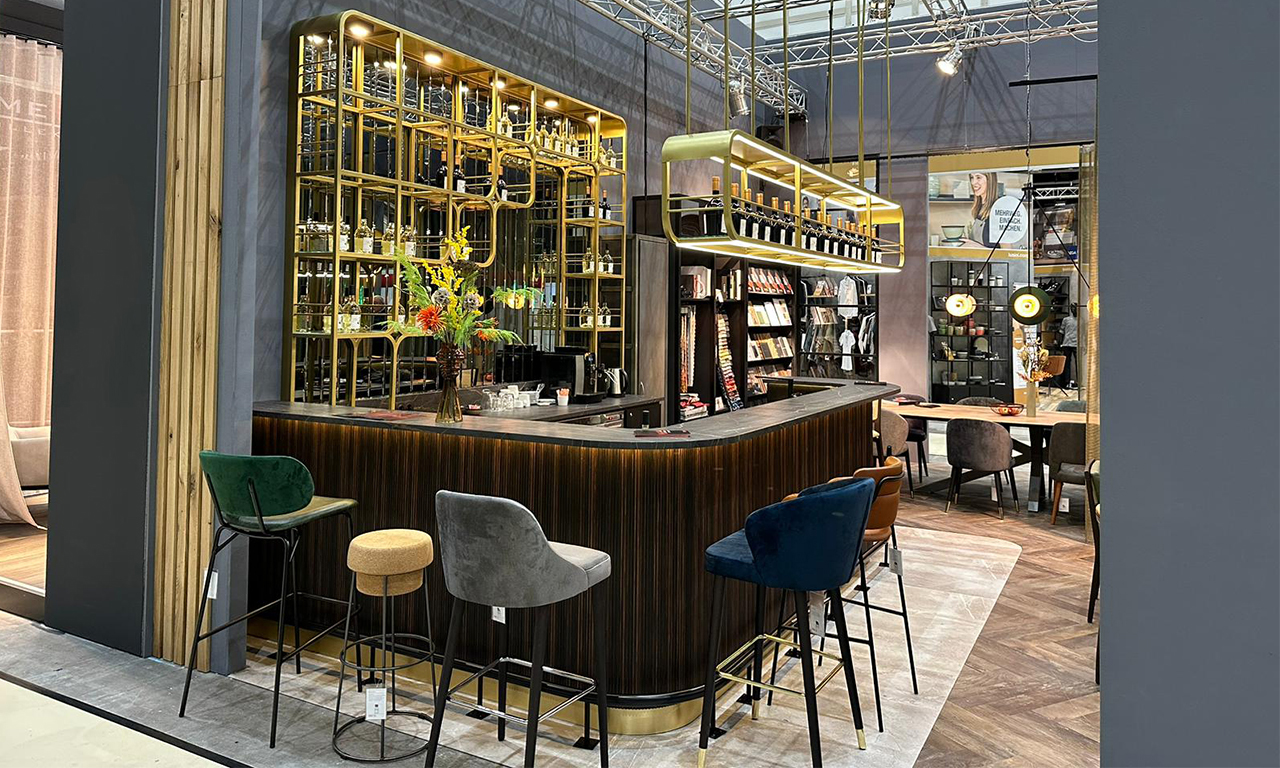
Trade show and event furniture needs to make an impression in a matter of hours, hold up through a full show floor schedule, and pack down efficiently for the next venue. The sourcing priorities here differ meaningfully from permanent hospitality furniture, where a piece is chosen once and then simply lives in one place for years. Getting this sourcing decision right means thinking less like a hotel furnishing a lobby and more like a logistics team that happens to care deeply about design and brand presentation.

Designing for Immediate Visual Impact
Event furniture has seconds, not minutes, to catch attention on a busy show floor, which makes bold form and finish choices more important here than in a permanent venue where guests have time to appreciate subtler design. A chair or bar unit that would read as understated and genuinely tasteful in a quiet hotel lobby can simply disappear into the visual noise of a crowded exhibition hall filled with competing booths.
This doesn't mean every piece needs to shout, but it does mean silhouette, color and finish deserve considerably more weight in the sourcing decision than they would for a permanent installation, since the furniture is often doing double duty as both functional seating and a brand signal read from across the aisle.
Portability and Fast Assembly for Repeated Use
Furniture used across multiple events needs to assemble quickly, pack down compactly, and survive repeated transport without visible wear, priorities that rarely feature in permanent venue furniture. A piece that takes forty-five minutes to assemble might be perfectly acceptable for a one-time hotel fit-out, but becomes a genuine liability when a crew needs to build an entire booth in a two-hour setup window shared with dozens of other exhibitors.
Hardware quality matters more here too. Connection points that loosen slightly with each assembly cycle might go unnoticed after one use, but after a dozen events that same wear can turn into a wobbly, unprofessional-looking piece exactly when it needs to look its best. Requesting a sample piece and running it through several full assembly and teardown cycles before committing to a larger order reveals this kind of wear pattern far earlier than waiting for feedback from the field crew after the third show of the season.

Branding Integration Without Compromising Quality
Furniture that doubles as a branding surface, custom upholstery, branded panels, needs to balance marketing impact with genuine comfort and durability rather than treating branding as the only priority. It's tempting to prioritize the graphic real estate a piece offers over how it actually performs, but a branded ottoman that looks great in a rendering and falls apart after three events undermines the brand more than it helps.
The strongest approach treats branding as one layer applied to genuinely well-built furniture, rather than building furniture around the branding requirement first and treating comfort and durability as secondary concerns. Sourcing teams that specify the furniture frame and comfort standard first, then layer branding onto an already-approved base, tend to end up with pieces that still look professional several seasons and several graphic refreshes later.
Sourcing for an Upcoming Event Season?
Let's find pieces built for repeated setup and real transport demands.
Rental Versus Purchase for Event Furniture Fleets
Businesses attending events regularly benefit from owning a core furniture fleet, while occasional exhibitors are usually better served renting for each specific event rather than carrying storage costs year-round. The break-even point depends heavily on event frequency, but as a general pattern, a company attending four or more events per year typically recoups the investment in owned furniture within eighteen to twenty-four months of regular use.
For companies still building their event calendar, a hybrid approach often works well: own a small core set of signature pieces that reinforce brand identity, and rent supplementary furniture for larger events that need more seating or display surfaces than the core fleet provides. This keeps upfront capital exposure limited while still giving every event a consistent, branded anchor that visitors start to recognize across the season.
Weight and Shipping Considerations for Multi-City Circuits
Furniture that travels between multiple event cities in a single season accumulates shipping costs that can exceed the furniture's purchase price if weight and packing efficiency were not considered at the sourcing stage, making this a genuine cost factor rather than a secondary logistics detail. A beautifully designed piece that happens to be twice as heavy as a comparable alternative can quietly erode a season's event budget through freight costs alone.
Requesting shipping weight and packed dimensions upfront, not just finished dimensions, gives a much clearer picture of the true cost of a multi-city circuit before committing to a specific furniture line, and often reveals that a slightly more expensive piece per unit turns out cheaper overall once freight is factored in across an entire season.

Maintaining a Fleet Across a Busy Event Season
A furniture fleet used across back-to-back events needs a maintenance routine built around quick turnaround between shows, not the slower pace of a permanent venue, since there is rarely more than a day or two between one teardown and the next setup. Waiting until furniture visibly fails before addressing wear is a losing strategy when the next show is already on the calendar.
A short post-event inspection checklist, checking hardware tightness, upholstery condition and any visible transport damage, catches small issues before they become the kind of visible problem that undermines a brand's presentation on the show floor at the very next event.
Insurance and Liability Coverage for Event Furniture
Furniture that travels between venues and gets handled by third-party show floor crews carries a genuinely different risk profile than furniture sitting quietly in a permanent location, and a standard business insurance policy does not always automatically extend to cover this kind of repeated transit exposure. Checking with an insurer specifically about event furniture in transit, rather than assuming existing coverage applies without question, avoids a nasty surprise if a shipment is damaged or lost between venues.
Show organizers themselves often carry limited liability for exhibitor property, which means the responsibility for genuine protection sits squarely with the exhibiting business rather than the venue. Building this insurance conversation into the same planning stage as furniture sourcing itself, rather than treating it as an afterthought handled separately by a different department entirely, keeps a business from discovering a coverage gap only after something has already gone wrong at an event.

Your Trade Show Furniture Checklist
- Selected furniture with strong visual impact for busy show floor environments
- Confirmed pieces assemble quickly and pack down for repeated transport
- Balanced branding integration with genuine comfort and durability
- Weighed rental versus ownership based on event frequency
- Considered weight and shipping costs for multi-city event circuits
- Planned a maintenance routine suited to fast turnaround between events
Event furniture works under a compressed timeline that rewards different priorities than permanent venue furnishing. If you are sourcing furniture for an upcoming event season, we can help you find pieces built for repeated setup and real transport demands.
If you found this useful, you may also enjoy our article on Festive and Seasonal Furniture Setups: Planning Without the Chaos.
OUR SERVICES
MORE FROM OUR BLOG
About P&M Furniture
P&M Furniture designs and delivers commercial-grade furniture for hotels, restaurants, cafes and bars across Europe, combining durability with design that supports how each venue actually works.
Sourcing for an Upcoming Event Season?
Let's find pieces built for repeated setup and real transport demands.
Request a Quote